
By Luisa Freitas and Abiodun Salako
Rising water stress is putting intense strain on food production, and that strain is spilling into the land, ecosystems and communities that depend on secure water and stable food supplies. Around 2.4 billion people already live in water-stressed areas, and much of the world’s farmland is under similar pressure. The challenge will become harder as food demand rises. Feeding the world by 2050 will require roughly half again as much agricultural output, a shift that could push global water withdrawals up by around 30 per cent (CSIS, 2025). Rice, wheat and corn, which provide more than half of the world’s food calories, are already feeling the strain: a third of their supply is grown in areas where water is highly stressed or unpredictable (WRI, 2024).
Drought, on the other hand, exacerbates the challenges. The area of land affected by drought has doubled since the start of the twentieth century, and droughts have become more severe across much of this land in recent decades. In the driest years, crop yields can fall by as much as 22 per cent. The cost is rising too as a single drought episode now costs at least twice as much as it did in 2000, and the OECD expects that gap to grow by 2035 (OECD, 2025). GEF-9 responds with two Integrated Programmes, Drylands and Drought Management and Food Systems, designed to address these issues across regions and communities. This piece follows our first article on Critical Forest Biomes and Sustainable Cities, turning now to what these two IPs aim to achieve and where E Co’s experience can support countries and partners developing projects in these areas.
Drylands and drought management
Drylands are regions where rainfall is naturally scarce and unpredictable, so unlike wetter biomes, they depend on each season’s rain rather than deep water reserves, leaving them acutely exposed when rainfall patterns change. Drylands cover around 40 per cent of the world’s land area and support two billion people, holding 44 per cent of the world’s agricultural land and roughly 60 per cent of its food production. More than 30 per cent of urban areas, and over a third of the world’s urban population, are in dryland regions, which also contain more than a quarter of the world’s biodiversity hotspots. These landscapes are defined by water scarcity, a condition that continues to intensify. Drought already affects 1.84 billion people across 101 countries, 85 per cent of them in low or middle income countries, and around 40 per cent of the world’s population already faces water scarcity, putting as many as 700 million people at risk of displacement by 2030.
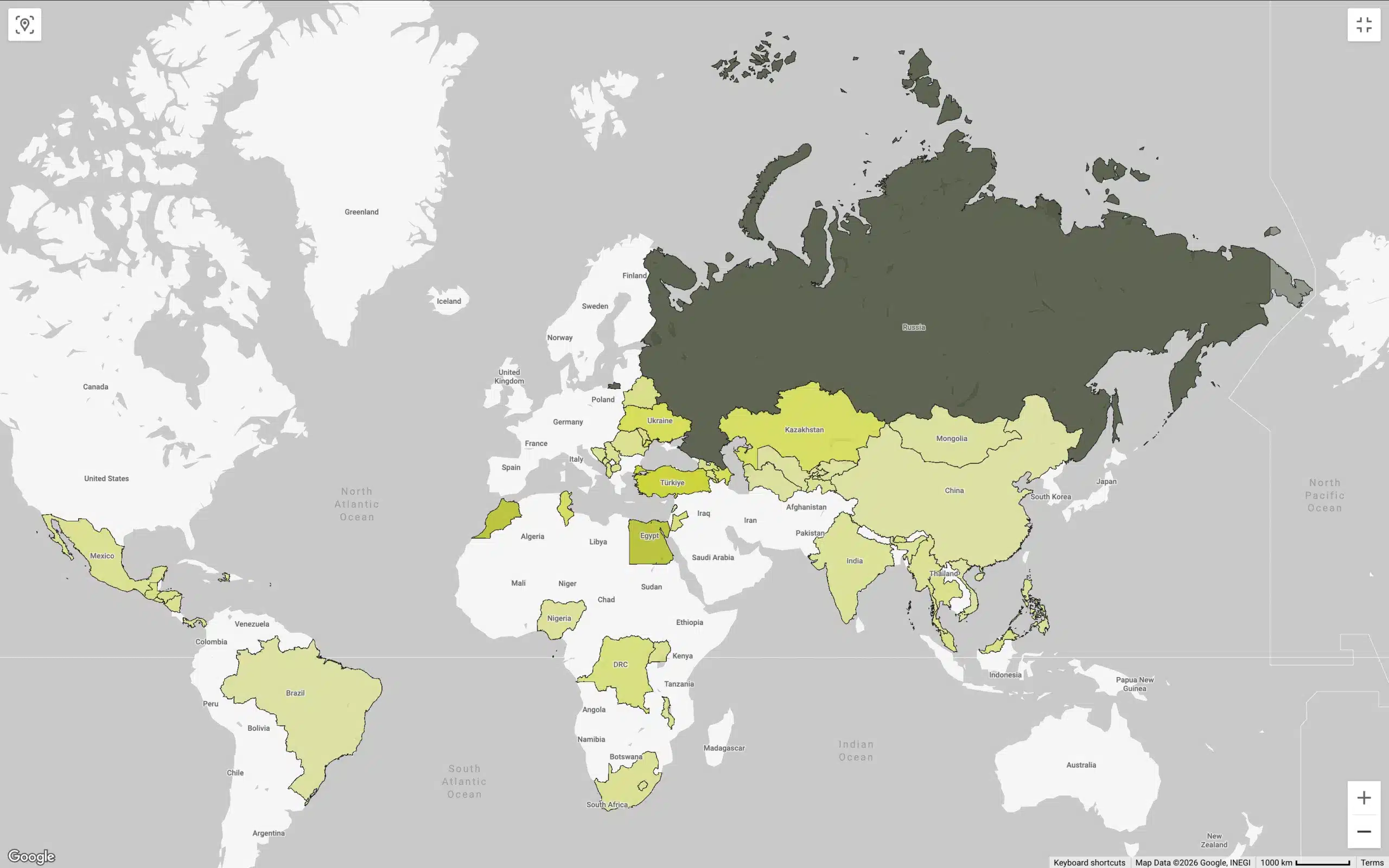
Drylands and drought management is a new IP for GEF-9, proposed directly in response to a request from the Intergovernmental Working Group on Drought at UNCCD COP16 for a dedicated programme covering proactive drought prevention and management. It builds on the GEF-7 Drylands Sustainable Landscape Impact Programme, which worked across eleven countries, and on the GEF’s long history with the Great Green Wall Initiative in the Sahel. The programme will take a practical approach to drought, combining early warning systems, climate adaptation, smarter land management, aquifer recharge and better water allocation. Moreover, it will promote transboundary cooperation, stronger policies and private sector investment, while working with platforms such as the Riyadh Global Drought Resilience Partnership (RGDRP).

The programme is structured around three pillars, monitoring and early warning, risk and impact assessment, and mitigation, preparedness and response, supporting countries to shift from reactive drought relief towards drought-smart land management, groundwater protection and ecosystem-based measures that build resilience before a crisis hits. It falls primarily under the Land Degradation Focal Area, with contributions to Biodiversity and Climate Change. The UNCCD puts the global cost of implementing national drought plans at USD 210 billion, a gap the programme aims to help close by working alongside partners such as the RGDRP, which has already attracted USD 12.15 billion in pledges.
Moreover, the IP also places emphasis on women’s and youth’s participation, securing tenure rights and equitable access to land and water resources for the Indigenous Peoples and local communities most exposed to drought. Private capital is expected to flow in through blended finance instruments such as index-based insurance and performance-based bonds tied to soil moisture indicators, alongside direct investment in drought-tolerant crop technology and market links for dryland commodities such as cotton, shea and gum arabica.
Food systems
Global agrifood systems support a third of the world’s workforce and are central to food security and economic growth, but they are also a major driver of deforestation, biodiversity loss and land degradation. Agriculture accounts for 70 per cent of global freshwater withdrawals and contributes to 78 per cent of global ocean and freshwater eutrophication. Food systems emit around 20 billion tonnes of carbon dioxide equivalent a year, close to a third of global emissions, most of it from agriculture and land-use change. Between 30 and 40 per cent of food produced worldwide is wasted or discarded, a waste stream responsible for 8 to 10 per cent of global emissions and roughly USD 1 trillion in cost each year.
Since GEF-6, 49 countries have taken part in food systems programmes, and GEF-9’s Food Systems IP extends that work through both place-based and commodity-based approaches, aiming to scale nature-positive food systems from production through to distribution and consumption. Interventions span sustainable and regenerative agriculture, livestock and dairy management, where the livestock sector accounts for 90 per cent of agricultural emissions and a fifth of that from dairy alone, and aquaculture and fisheries.
The programme also looks past the farm gate to post-harvest handling, storage and cold chain infrastructure, since cutting food loss in perishable goods delivers nutrition and emissions gains together. It connects directly with the Sustainable Cities IP through public food procurement and peri-urban agriculture. Indigenous Peoples and local community organisations are prioritised as partners in project design, with specific measures to improve access for women and youth across the value chain.
GEF-9 will pool in private capital mainly through blended finance, reimbursable grants, low-interest loans and outcome payments tied to improved agricultural practices, alongside partnerships with anchor companies across agribusiness value chains.
E Co’s track record across both programmes
E Co. has supported drylands, water security and climate resilience work across several countries. In São Tomé and Príncipe, we provided technical assistance to the Ministry of Agriculture and AfDB, reviewing the country’s hydrometeorological network in hotspot catchments, identifying gaps in early warning system coverage and developing climate resilience action plans that informed national water infrastructure planning. We also supported the African Development Bank on water supply resilience programmes in Malawi and Lesotho, carrying out climate risk assessments and adaptation options analyses that informed national water security strategies.
Our experience also connects food systems, agriculture and climate action. In the Philippines, for instance, we assessed the greenhouse gas emission reduction potential of UNIDO’s food cold chain partnership, with a focus on post-harvest losses and cold storage. We also developed the full GEF funding proposal for the European Bank for Reconstruction and Development’s Sustainable Bioenergy Value Chain Innovations project in Ukraine, including the Gender Action Plan and Stakeholder Engagement Plan, for a programme built around converting agricultural residues and waste into bioenergy.
If you are developing projects under GEF-9’s Drylands and Drought Management and Food Systems integrated programmes, we would be glad to support that work. Get in touch with our GEF focal points, Marion Denates at marion@ecoltdgroup.com and Anne Gander at anne@ecoltdgroup.com

