
Communities dependent on rain-fed agriculture, pastoralism, and non-wood forest products in Ethiopia face escalating climate variability – from prolonged multi-year droughts to increasingly intense rainfall. We spoke to Principal consultant Zsofia Kovacs, who led the project ‘Promoting Adaptation and Resilience through Innovation and Entrepreneurship for Green Jobs and Livelihood Improvement in Ethiopia.’ This project is one of two approved GEF initiatives that our team implemented for the United Nations Industrial Development Organisation (UNIDO). Though E Co. has built its reputation on GCF project development, this project reflects our deepening GEF engagement, where whole-of-government thinking connects the priorities of local communities to the ambitions of national and global climate frameworks.
1. How does this project contribute to long-term climate resilience in the target region?
The project ‘Promoting Adaptation and Resilience through Innovation and Entrepreneurship for Green Jobs and Livelihood Improvement in Ethiopia’ addresses significant climate and development challenges in the Eastern Horn of Africa. Since 2000, there have been two positive (El Niño and positive IOD) and two negative (La Niña and negative IOD) phase alignments in this region. Each of the four alignments resulted in climate shocks for the community members. For instance, the region experienced extreme rains in 2019-20, followed by widespread and devastating floods, then a drought from 2020 to 2023, and severe flooding in 2023-2024. Among the countries in the Eastern Horn of Africa region, the Federal Democratic Republic of Ethiopia ranks among those at the highest ‘extreme risk’ from climate change. For instance, nine drought events have been reported in Ethiopia since 2000, impacting 74.71 million people. The 2017 drought left more than 5.6 million people in need of food assistance.
Ethiopia’s agricultural sector, encompassing rain-fed crop production, pastoralism, and non-wood forest products (NWFPs) such as gums, resins, and frankincense, employs approximately 70% of the population and accounts for a significant share of national GDP. Yet over 85% of the country’s land is degraded, and the communities most dependent on these natural systems are the least equipped to absorb climate shocks. In response to these challenges, the project brings in a market-driven resilience model by integrating Nature-based Solutions (NbS) into private-sector business models. Key project strategies include:
- Climate-Smart technology deployment: Disseminating drought-resistant crop varieties (e.g., early maturing teff and sorghum) and improved fodder like Bana grass and alfalfa to stabilise livestock systems.
- Landscape restoration: Restoring and ensuring the sustainable management of 10,000 hectares of land, directly supporting Ethiopia’s Green Legacy Initiative (GLI).
- Financial de-risking: Collaborating with financial institutions to introduce cash flow-based lending and providing Results-Based Financing (RBF) grants to MSMEs to catalyze private capital for adaptation.
- Sustainable infrastructure: Establishing common-use agro-processing facilities and solar-powered irrigation to ensure year-round feed supply and reduce post-harvest losses.
The project is designed to catalyse a lasting economic shift, moving 147,000 direct beneficiaries away from humanitarian aid toward a market-driven, climate-resilient economy. This is achieved by creating green jobs across the Non-Wood Forest Product (NWFP), livestock feed, and food tree value chains.

2. What makes this project particularly important for the country’s climate priorities or vulnerabilities?
The project is critical because it targets Ethiopia’s primary engines: agriculture and livestock, which employ approximately 64% of the workforce and support 70% of the population. Ethiopia is ranked 155 out of 187 on the ND-GAIN index, signifying high vulnerability and low readiness for climate change. In response to this vulnerability, the project focuses on regions affected by the 2017 drought. In line with Ethiopia’s Nationally Determined Contribution (NDC) and National Adaptation Plan (NAP), the project prioritises:
- Livelihood diversification: Moving beyond traditional rain-fed agriculture by promoting high-value NWFPs like gum, resin, and honey, as well as food trees.
- Gender equity: Women are central to the NWFP and food tree economy, yet they cultivate plots 30–50% smaller than men and are significantly less likely to receive formal credit. By mandating that 40% of direct beneficiaries and supported MSMEs be women-led, the project introduces a design intervention to address long-standing structural exclusion.
- Youth empowerment: Engaging Ethiopia’s large youth population by providing the training and financing needed to transition into green entrepreneurship.

3. Which part of the project design best showcases our consultancy’s expertise in developing high-quality, GEF-aligned project concepts and CEO-endorsed proposals?
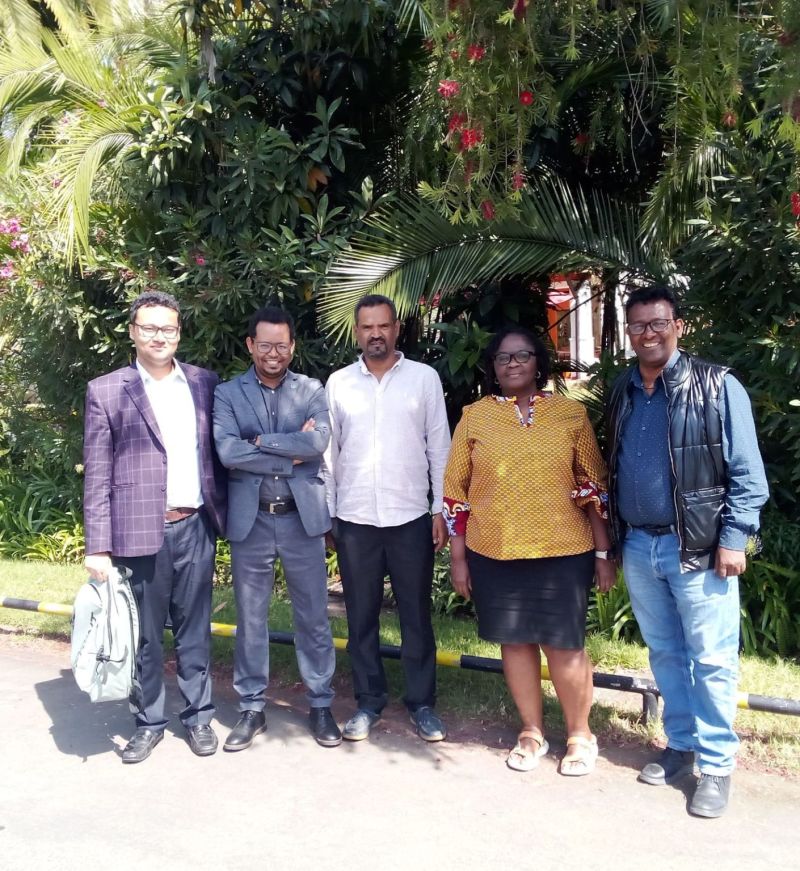
The project showcases E Co.’s expertise in navigating the challenges of fragile contexts in Sub-Saharan Africa. Specifically, the project design work involved regions such as Tigray, which have been affected by recent conflicts. Despite these challenges, the E Co. team has successfully collaborated with stakeholders from Tigray and secured significant co-financing support. The mobilisation of over USD 50.9 million in confirmed co-financing, alongside a GEF grant of USD 8.97 million, results in a leverage ratio of over 5.5:1. This demonstrates E Co.’s experience in effectively coordinating with stakeholders to attract co-financing.
Various financial de-risking architectures – including Results-Based Financing – have been incorporated into the project design to de-risk private-sector engagement in climate adaptation. The inclusion of Common-Use Agro-Processing Facilities and women-led nurseries will ensure a comprehensive value chain support mechanism in Ethiopia. By promoting Micro, Small, and Medium-sized Enterprises (MSMEs) clusters, the project design addresses the historical inability of small-scale entrepreneurs to achieve economies of scale, enabling them to collectively share resources, access credit, and improve market efficiency. Furthermore, the integration of high-tech solutions, such as blockchain-verified digital platforms for market traceability, demonstrates a commitment to the GEF-8 Programming Directions for private-sector innovation. This holistic strategy ensures that project interventions become self-sustaining after the GEF grant support.

