
By Felipe Arenas Gallo
Cities around the world stand at the front lines of the climate challenge. Responsible for over 70% of global greenhouse emissions, and home to approximately 4.4 billion people (56% of global population, and growing), they endure severe vulnerabilities such as extreme weather events, flooding, and heatwaves, yet they also hold tremendous potential for building resilience through innovative urban planning, green infrastructure, and low-carbon development.
However, the realisation of this potential is stymied by a widening financing gap. Estimates indicate that cities require approximately USD 4.3 trillion annually through 2030 for mitigation efforts alone, escalating to over USD 6 trillion per year from 2031 onward to support comprehensive climate action in key sectors such as transport, energy, and buildings (CCFLA, 2024).
A key challenge for COP30 will be how to close the gap between ambitious COP declarations, and the practical work of finding innovative ways for multi-level partnerships to structure and fund investment-ready urban projects. The next phase of climate action goes beyond commitments, it requires converting plans and pledges into pipelines that capital can back. Discussions on multi-lateral development bank reform, loss and damage finance, and direct subnational access are ready to reshape the urban climate finance landscape.
Set against the backdrop of Belém, one of the largest Amazonian cities, COP attendees will get a unique opportunity to experience the Amazon region as more than a global ecological biodiversity hub, but as a region that is home to over 50M people living in urban areas, and under direct threat from climate change. Belém’s dual identity as an Amazonian and urban centre offers a tangible lens for the discussion. Yet the lessons extend far beyond Amazonia: cities’ ability to mobilise finance will determine whether climate ambition triggers project and programme delivery.
The latest State of Cities Climate Finance 2024, by CCFLA, estimates urban climate finance flows at USD$ 831 billion in 2021/2022, with the greatest share of this coming from private finance to address mitigation (adaptation only corresponded to USD$ 10 billion). The report highlights key challenges to closing this gap, including insufficient commitment to urban climate action in global and national climate discussions, inefficient cooperation between levels of government, lack of capacity at the city level, and limited access to capital markets by cities.
While this outlook indicates that promising dynamics exist, and are triggering investment (particularly in transport, energy, and buildings), all sectors fall short of the investment needed to attain a 1.5C climate pathway. Furthermore, there are extremely pertinent opportunities for improvement, especially in increasing investment in less developed countries, and disbursing and tracking the adaptation investments that target preparing cities for the human and economic impacts of major climate events.
Overall, the data shows that capital is available and growing, but there are key opportunities that will help de-risk investments and support the bankability of city projects. These include increasing multi-level collaboration to increase direct flows to cities, to attract capital via adequate planning and pipeline development, and for capacity building at city government levels.
But why do urban initiatives that appear sound fail to become investable? Far from being the fault of any key stakeholder, there are key bottlenecks that hamper pipelines from turning into projects. These include unclear climate rationales and weak risk assessments, a mismatch between project conceptualisation and the available finance instruments, and the chronic underfunding and delay in project preparation. However, with recent attention focusing more on early-stage project preparation, there is a window to redesign how cities move from planning to bankability.
As climate finance specialists who partner with clients to unblock access to finance, E Co. has identified key governance levers that can help address the above. These may seem simple, but their implementation is by no means easy.
- Multi-level coordination – There should be a focus on creating a two-way flow of information between national goals, city plans, and finance windows. This can enable the translation of NDCs into subnational investment pathways. Subnational coordination models including the Coalition for High Ambition Multi-level Partnerships (CHAMP) for Climate Action provide a key model of how to enable this key focus area.
- Project preparation – Often, the primary bottleneck for climate finance is a lack of bankable projects, not ideas. Cities will often develop innovative urban plans, which fail to speak the language of investors who are looking to finance projects. Developing models for early project preparation and to leverage Technical Assistance grants offered by different funders, can be key ways to pay for the costs for early design, and to turn good ideas into bankable proposals.
- Pipeline aggregation – Investors and MDBs typically prefer to finance project portfolios, not pilots. Aggregating projects into a portfolio or programme can have the power of transforming collections of small, high-risk, high-transaction-cost local projects (e.g., restoring a single mangrove swamp in to provide coastal protection, mainstreaming biodiversity into a city plan) into a single, national-level portfolio with a unified investment thesis.
- Blended finance – Unlocking scale requires mechanisms that combine concessional and commercial capital to reduce perceived risks and crowd in private investors. For cities, this often means using public or philanthropic funds to finance early-stage preparation, provide guarantees, or subsidise specific risk layers, making projects more attractive to institutional capital. Effective blended finance frameworks can turn high-impact but “unbankable” adaptation and resilience projects into investable propositions by aligning incentives across stakeholders. You can read our recent white paper, ‘bridging the investability gap: Mobilising private capital for a resilient future’ for more on this.
At E Co. we are at the forefront of the discussion regarding how to turn climate ambition into bankable urban infrastructure. Having supported tens of countries to access climate funds and prepare urban adaptation investments, E Co. brings a practitioner’s view to these challenges. Additionally, our Principal consultant, Riccardo Magini, and Consultant, Felipe Arenas Gallo, are currently on the ground at COP30 in Belém advancing the urban climate agenda with our clients and partners.
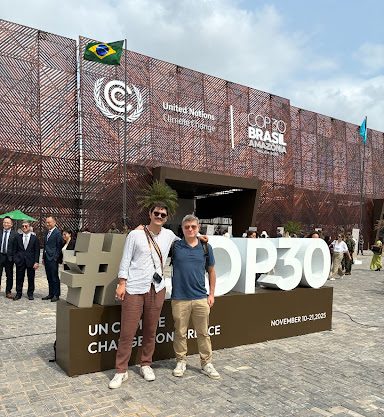
If you’re at COP30 and are keen to to gain further insight on the issues above, we invite you to register for E Co.’s COP30 side event on Monday 17 November at the IDB Amazonia Forever Station, Goeldi Museum. This side event will focus on the role of cities in the climate crisis, with a focus on exploring how development banks, technical partners, and city networks can transform ambitious climate plans into investment-ready projects.
We will count upon speakers from the IDB, the CHAMP Initiative, and different layers of government, in a discussion that will help provide practical insights on project preparation, de-risking, and blended finance. The session will highlight pathways to bridge the urban climate finance gap and accelerate implementation. Participants will gain actionable strategies for building partnerships that enable resilient, low-carbon, and inclusive cities worldwide.
COP30 represents a key chance to operationalise subnational access to climate finance and project preparation support. Belém, our host city, represents a key reminder of the many ways that humans have found to adapt our livelihoods to the most diverse settings. We will have the opportunity to engage this city as a live laboratory and stage to discuss globally relevant lessons for urban climate action. At the forefront of our discussions, we should always bear in mind that climate ambition will only matter if we build the financial architecture to deliver resilience.

If you’re at COP30 and would like to meet with our Principal consultant, Riccardo Magini and Consultant, Felipe Arenas Gallo, drop us a line at: enquiries@ecoltdgroup.com and we’ll put you in touch.
If you’d like to attend E Co’s side event, ‘From Vision to Investment: Mobilising Climate Finance for Resilient Cities – Advancing bankable, inclusive, and climate resilient urban transformation through multilevel partnerships and innovative financing solutions’, this Monday 17 November at the IDB Amazonia Forever Station, Goeldi Museum. Sign up here.

We invite you to explore E Co’s full range of technical advisory and climate finance consultancy services to ensure your projects and policies are inclusive and participatory.
Explore the rest of our road to Belém series to gain deeper insights into global climate action ahead of COP30.
- Why COP30 in Brazil could be a turning point for global climate action
- High stakes: NDCs and the global stocktake
- The Belém mandate: Why collaborative networks will define the success of COP30
- Reframing climate multilateralism: The Mutirão and the power of Indigenous collaboration
- From ambition to action: COP30 and accelerating the agriculture and food systems transformation
- Human & social development: Placing just transition, health, jobs, and equity at the centre
- Turning pledges into projects: Enablers for climate action at COP30 and beyond